
Claude Monet, A Legacy of Gardens
Les Franciscaines, Deauville, France.
Exhibition from July 11th to November 1st, 2026.
Les Franciscaines :
Monet, A legacy of Gardens
One hundred years after the death of Claude Monet (1840-1926) on December 5, 1926, in Giverny, Normandy is paying tribute to him in numerous ways. At the heart of this program, the Musée Les Franciscaines in Deauville offers a sensitive and contemporary reinterpretation of the legacy of the painter of the Water Lilies, placing his work in dialogue with that of artists around the world who share the same fascination with light, gardens, and color. Drawing on exceptional loans from the Musée d’Orsay, the Musée Marmottan, the museums of Dreux and Saint-Étienne, and the Institut du monde arabe (Claude & France Lemand Donation), the exhibition creates a dialogue between Monet and those who claim him as an influence: the Algerian Abdallah Benanteur, the Japanese Reiji Hiramatsu, the Canadian Jean-Paul Riopelle, and the photographers Jean Gaumy, Bernard Plossu, and Jorma Puranen.
Claude Lemand :
Benanteur, The Chosen cycle.
The Élus (The Chosen) cycle represents a pinnacle of Benanteur’s career, the finest “Monument to the Fallen for Algerian Independence and the End of Colonialism,” and a hymn of hope that the Life instincts of fragile Humanity will prevail over Death instincts, finally ushering in the long-awaited universal peace and brotherhood of a planetary Garden of Eden. Visitors will be able to make a pilgrimage to view the work in the Salle des Élus, a room dedicated to it within the Institut du monde arabe museum’s new exhibition layout, as a place of memory, reflection, contemplation, and aesthetic appreciation.
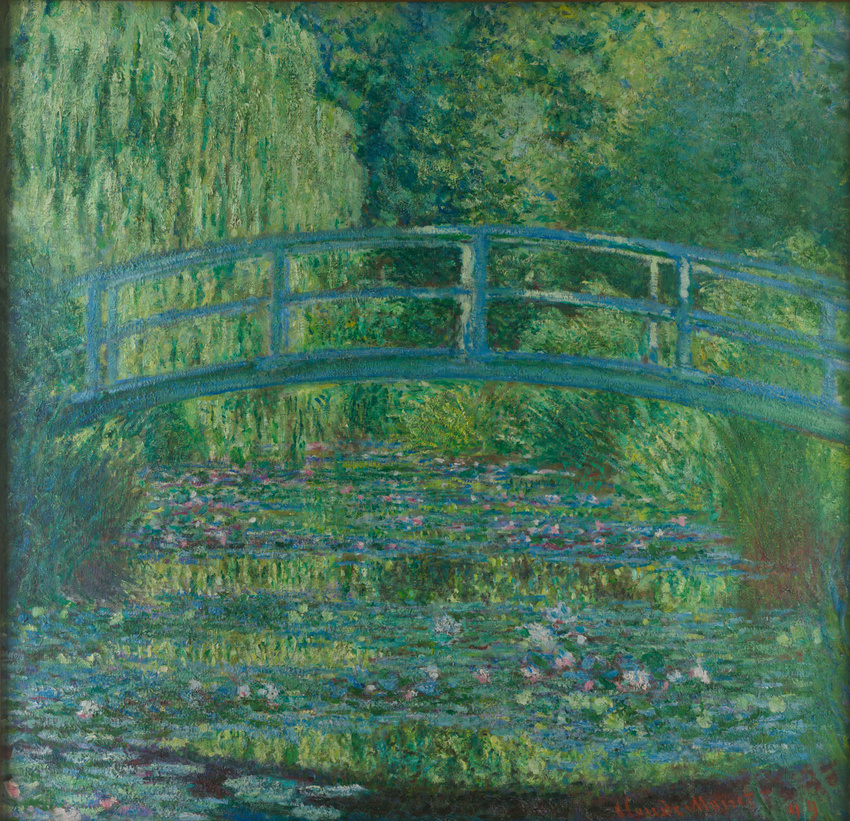
Claude Monet, Le Bassin aux nymphéas, harmonie verte, 1899. Oil on canvas, 89,5 x 92,5 cm. Legs comte Isaac de Camondo, 1911. © GrandPalaisRmn (musée d’Orsay) / Stéphane Maréchalle.
Cézanne et nous.
Grand Palais, Paris
Exhibition from September 23 to January 17, 2027.
Centre Pompidou :
Cézanne et nous
This unique exhibition offers a rich, ongoing dialogue between works by Paul Cézanne (1839-1906) and those by artists who, from the late 19th century to the present day, have consistently drawn inspiration from his body of work to reinvent painting. It tells the story of an unparalleled legacy, one that unfolds through an interplay of influence and the assertion of a shared master. The artist became one of the uncontested fathers of Western modern art. In the post-war period, he was still regarded by figures driving a revival of abstraction in Europe and the United States, whether proponents of lyrical and optical abstraction or of hard-edge painting. Some 180 pieces are presented: 70 by Cézanne and 75 by other artists.
Claude Lemand :
The Mountain by Etel Adnan
The Mountain is emblematic of the most inspired paintings in her abundant production of the last twenty years, with its vibrant and contrasting colors, between the blue of the Mediterranean and the red sun of Lebanon. Although small in size, its composition is vast, planetary. This mountain, tirelessly sung about, painted, and drawn by Etel, is Mount Tamalpais, which she saw when opening the window, adorned with flowerpots on the sill, of her house in Sausalito near San Francisco: it was her landscape of paradise lost, dreamed of, or hoped for.
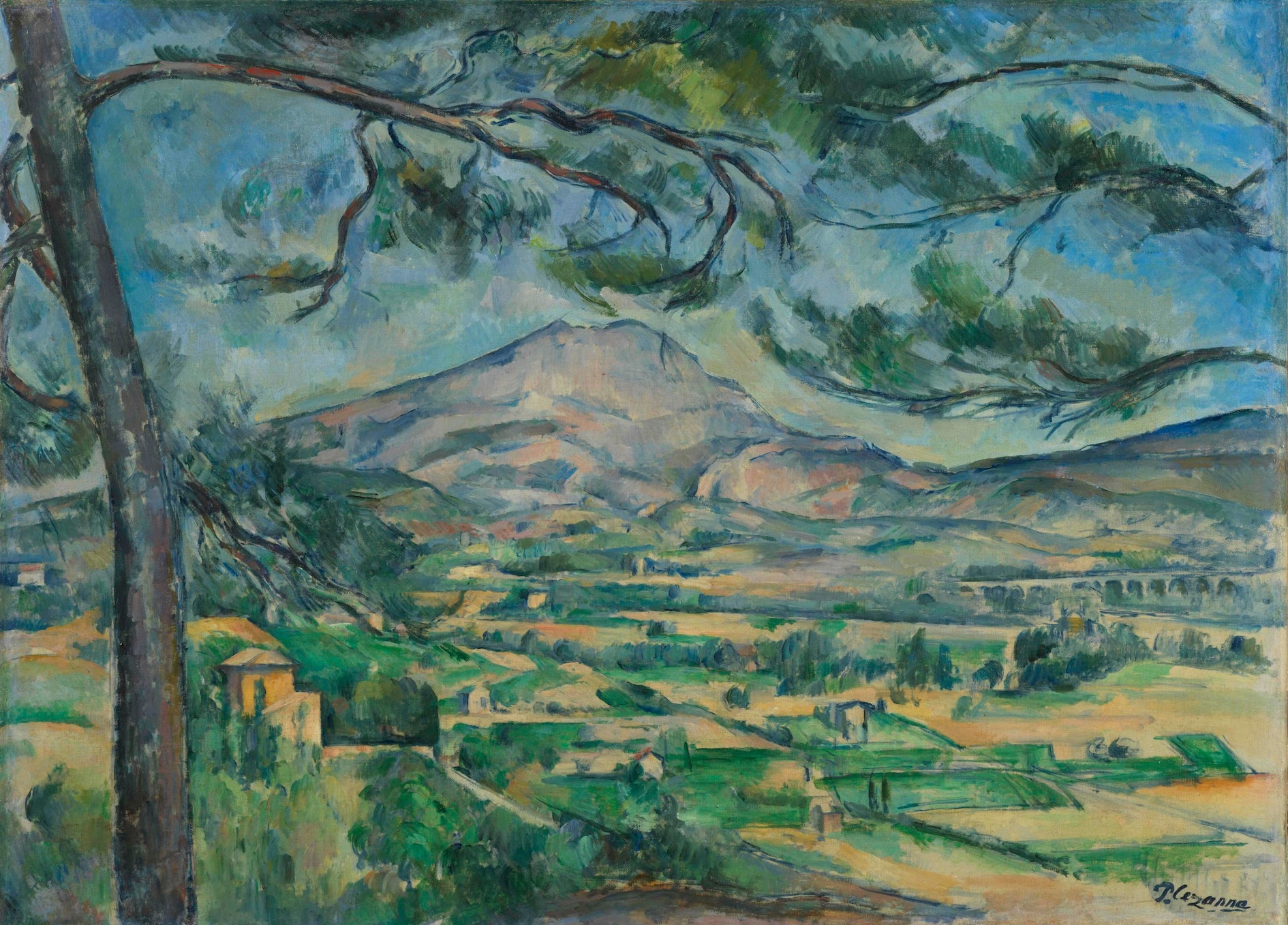
Paul Cézanne, La Montagne Sainte-Victoire au grand pin, ca. 1887. Oil on canvas, 66.8 x 92.3 cm. The Courtauld Institute of Art, London. © Courtauld.